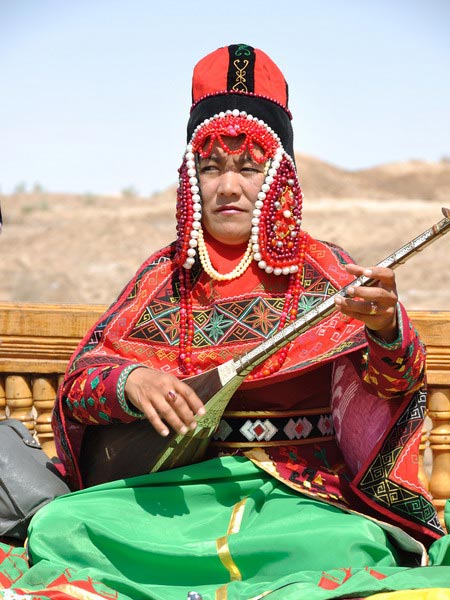
 Traditional Karakalpak music
is multifaceted narration of poems and epics to the sound of traditional
string bow instruments the qobuz (qobiz) and the duwtar (Dutar) and is closely connected with the oral folk tales and epics of their nomadic past. It is transmitted by two key figures of this culture: the jiraw and baqsi both are poets, stortytellers and musicians at the same time. There traditional songs are divided into ritual kosiks: lullabies, funeral, wailing songs, wedding (synsu, bet ashar, korimlik). There's are also many love-lyric and historical songs in the national repertoire
Traditional Karakalpak music
is multifaceted narration of poems and epics to the sound of traditional
string bow instruments the qobuz (qobiz) and the duwtar (Dutar) and is closely connected with the oral folk tales and epics of their nomadic past. It is transmitted by two key figures of this culture: the jiraw and baqsi both are poets, stortytellers and musicians at the same time. There traditional songs are divided into ritual kosiks: lullabies, funeral, wailing songs, wedding (synsu, bet ashar, korimlik). There's are also many love-lyric and historical songs in the national repertoire The jiraw is a bard who specialises in heroic epics. He depicts in his singing, the courage and strength of heroes involved in titanic combats.
His narrative unfolds using a guttural tone and a deep voice reminiscent of the sound of his two-string fiddle, the qobiz. This instrument has a unique structure with two thick strings made from horse hair. The voice and the fiddle of the jiraw, as well as the content and values revealed in the epics make an inimitable sound recreating the wild steepe of Central Asia.
As for the baqsi, there music stems from a rather different style. They sings epic poems, which instead celebrate courtly love, in a narrative style that describes the quest for love, either by an individual or a couple. The baqsi accompanies himself with a two-string lute, the duwtar (Dutar), while singing in a natural voice.

 Jiraw (Throat singing) gained wide popularity from the end of the 18th century, when much of the most important Karakalpak literature and music was composed.
 Such famous Karakalpak poets-musicians as Djien-zhirau (1730-1784), Kunkhodzhi (1799-1880) lived and worked during this period. They accompanied their stories with penetrating music trill, which gave a tragic, inimitable twist to their unique poems and epics. The Karakalpaks during most of the 18th -19th centuries were fighting for their independence from both the Kazakh and Khiva Khans. In this period the great tragedy unfolded as the Kazakh Khan Abulkhair pushed the Karakalpaks from the mid Syr Darya in the direction of Tashkent and Khorezm. A witness of these forced migrations, Jien-zhirau wrote the poem "The wandering nation", which reflected the darkest page of the history of the Karakalpak people.
The most famous exponent of baqsi during the 19th century was the national poet Ajiniyaz. His most famous works include "Buzatau", which tells of the Karakalpaks’ piligrimage and "Dzhigits" or in english "Other" which reflected his patriotic, humanistic and philosophical views.
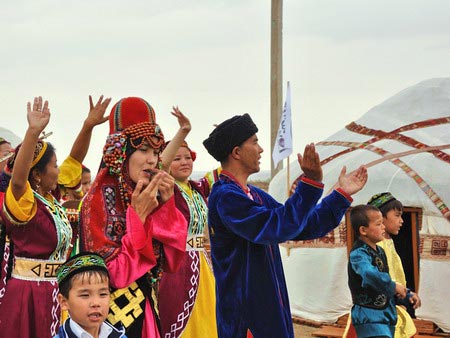 Another great Karakalpak baqsi was Berdymurad Kargabay ogly (known as Berdakh) who is justly considered to be a founder of the Karakalpak literature and was a noted baqsi singer much loved in his era. Berdakh regarded Navoi, Fuzuli, Kunkhodzhi as his teachers. His creativity began with the reading of verses to the tune of dombra, when he was 18 years old. Throughout his life he composed poems and runes on on mainly patriotic and historical themes.

