Wednesday, September 4, 2013

The Girjek or Spike Fiddle of Karakalpakstan


The Girjek or spike fiddle is used by Uyghurs, Uzbeks, Tajiks, Turkmens and Karakalpaks.

It is a very distinct instrument with beautful inlayed or leather covered bases it has characteristics similiar to the violin. A round-bodied spike fiddle with 3 or 4 metal strings and a short fretless a spherical resonator with a skin soundtable. Although not visible, the acoustics produced are made possible by this skin inlay soundtable within the base. The bow is made of horsehair.

The instrument is held on the knee while playing. During the 19th century the Ghirjak had two, three, four or seven strings, but by the end of the 20th century only the four-string Ghidjak was in use in Uzbekistan. The sound became stronger and diapason became wider. Other related instruments are the Girjek-alt and Girjek-prima.

In Karakalpakstan the Girjek player is called a Girjeksh. It is played both as a solo instrument and in the orchestra and is also used to accompany singers.

The origins of the girjek are not known, but the instrument is mentioned in 10th-century manuscripts which indicate that almond shells were used to construct the bridge (harak). It was depicted in 15th-century Persian miniature paintings is similar in construction to the 20th-century instrument but had a longer spike.


Source: http://nukus36.karakalpak.ru/cyberfair/girjek.html

Music Instruments of Uzbekistan The rich variety of musical instruments within Uzbekistan reflects the great diversity of musical styles performed on them. Small ensembles of mixed instruments are at the heart of the classical maqâm tradition. Characteristic instruments in such ensembles include the long-necked fretted lutes (tanbur, dutar, ud, tar, rubab, sat (setar), spike fiddle (ghijak/girjek) and the Kobooz), also present are instruments such as the side-blown flute (nai and ghadjir nai), struck zither (chang), frame drum (dayra) and a small clarinet like instrument made from reed (qoshnay). Another typical ensemble consists of long trumpets (karnai), loud oboes (surnai) and, membrane percussion instruments – (doira, chindaul and others). The kettledrums (naghora) are also an obligatory presence at festive and ceremonial occasions. In rural regions, epic singers accompany themselves on a short fretless lute (dombra), while amateur musicians play the Jew's harp (chang-kobuz) or a simple variety of the spike fiddle (kiak). Source: http://www.iberiasiatour.com/english/Music.html

Tuesday, September 3, 2013

KARAKALPAK EPIC HERITAGE - NEW CD

Karakalpak epic heritage CD

This CD is dedicated to the living musical heritage of the Karakalpak bards. It is the fruit of a fieldwork inventory conducted in 2010 by Frederic Leotar under the auspices of UNESCO,* in cooperation with cultural institutions from Uzbekistan and Karakalpakstan. This inventory, which was conducted across Karakalpakstan, resulted in the recording of nearly 300 vocal and instrumental works.

The 22 songs on this CD were selected with the help of several well-known musicians, including Qarimbay Tinibaev, the famous baqsi, girdjek player and professor at the College of Arts in Nukus, the capital of Karakalpakstan.

1. Nama basi, G’. O’temuratov, duwtar, trad.
2. Asirim, B. Sirimbetov, voice and qobiz, trad.
3. Ga’lga’lay, O. O’tambetov, voice and duwtar (N. Nuratdinov, girdjek), trad.
4. Saltiq, G. Xamitova, voice and duwtar (I. Sabourova, girdjek), trad.
5. Begler, B. O’tepbergenov, voice and duwtar, trad.
6. Ulli ziban, J. Piyazov, voice and qobiz, trad.
7. Qoshim palwan, B. Asqarova, voice and duwtar (I. Sabourova, girdjek), trad.
8. Ken’esli ton, M. Aekeev, voice and duwtar, trad.
9. Kelte nalish, Z. Ibragimova, voice and duwtar, trad.
10. Idiris, N. Nuratdinov, voice and duwtar (G. Sultamuratov, girdjek), trad.
11. Qa’wender, M. Jumatova, voice and duwtar, trad.
12. Tolg’aw, B. Esemuratov, voice and qobiz, trad.
13. Neshe gu’ller, G. Ra’metova, voice and duwtar
14. Besperde, T. Qalliev, voice and duwtar (S. Qayipnazarov, girdjek, A. Atarbaev, balaman), trad.
15. Sa’rbinaz, G. Allambergenova, voice and duwtar (I. Sabourova, girdjek), trad.
16. Adin’nan, A. Seyilxanov, voice and duwtar, trad.
17. Sanali keldi, Z. Sheripova, voice and duwtar, trad.
18. Qu’nxoja, T. Qalliev, voice and duwtar, trad.
19. Muwsa sen yari, N. Nuratdinov, voice and duwtar (G. Sultamuratov, girdjek), trad.
20. Qa’nigu’l, G. Allambergenova, voice and duwtar (I. Sabourova, girdjek), trad.
21. Nalish, M. Jumatova, voice and duwtar, trad.
22. Aq ishik, G’. O’temuratov, duwtar, trad.

Source: See UNESCO site for more information http://www.unesco.org/new/en/tashkent/about-this-office/single-view/news/karakalpak_epic_heritage/#.UicAD-3PuP8

See promo video - Karakalpak Epic Heritage (1CD -2012) http://www.videomix.cz/video/V156UOa-8to/
 

Saturday, May 25, 2013

TOURISM IN UZBEKISTAN

Uzbekistan Tourist Destination

Every year the number of tourists visiting Uzbekistan increases. Interest in its unique culture and heritage, in particular its historical and architectural monuments which are by far the most striking in Central Asia, grows steadily.

Uzbekistan situated on the cross roads of the Silk Road boasts more than 4,000 historical and architectural monuments. Besides a plethora of archaeological sites it also offers incredibly beautiful mosques, mausoleums, palaces, forts, ruined temples and monasteries and shrines; an invaluable spiritual heritage of its long and great history that is preserved with care. The main tourist centers of Uzbekistan ― Samarkand, Bukhara, Khiva, and Shakhrisabz are included in the UNESCO World Heritage List ― attract millions of foreign tourists annually.

Whilst tourism in Uzbekistan has been primarily centered on its rich cultural heritage. The country is also blessed with many varied and contrasting landscapes; natural beauties such as  mountains, valleys, desserts, forests and rivers.  There are also many adventure activities available for visitors including trekking, mountain climbing, water sports, river rafting,hot springs, safaris, bird watching, fishing, horse back riding and skiing. In addition Uzbekistan is famous for its rich traditions of hospitality, which are so deeply rooted within its people. This coupled with an amazingly varied and tasty cuisine all make it a very attractive and interesting tourism destination for travelers from all over the world.

Useful links:
Ministry of Foreign Affairs of the Republic of Uzbekistan

National Company "Uzbektourism"

Karakalpakstan Tourism


Karakalpakstan at 165,700 km2 is the largest region of Uzbekistan, accounting for over a third of its entire land area (447,400 km2). In the northwest, it includes a large part of the Ustyurt plateau that lays between the Caspian Sea and the erstwhile Aral Sea; to the east is the Kyzyl-Kum desert, which reaches further into Uzbekistan and Kazakhstan.

The fertile part of the region is the Amu Darya river delta - formerly ancient Khorezm, which is today shared by three distinct entities: the Uzbek oblast of Khorezm, whose capital is Urgench; the Turkmen oblast of Dachaouz; and the autonomous republic of Karakalpakstan, whose capital is Nukus.

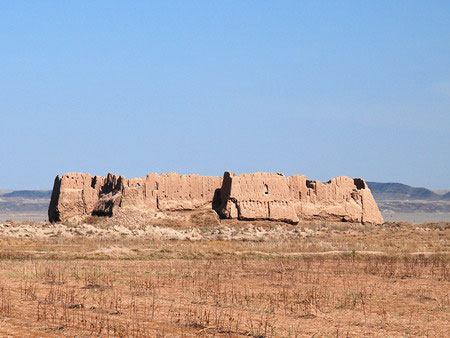
Karakalpakstan has a long and rich history with diverse cultural offerings ranging from, at one extreme, the ruins of Khorezm’s ancient (5th century BC) civilization to, at the other, the Nukus Museum, which houses the Savitsky Collection comprising the world’s second largest collection of 20th century Russian avant garde art as well as the largest folk art collection in Central Asia.

The Republic is also the site of a major environmental catastrophe: the disappearing Aral Sea, formerly one of the world’s fourth largest inland lake and now reduced to only a small portion of its original size. Visting the former coastal town Muynak is  a very moving experience.

Karakalpakstan’s climate is extreme continental, i.e. very cold in winter and very hot in summer, so the best time to visit is either in the spring or early summer (April through June) or in the fall/Autum (September through mid-November), when temperatures range between 15-25C.

Karakalpakstan is not a conventional tourist destination, nor for the faint-hearted. But, as increasing numbers of International travelers prove, it offers many unique artistic, cultural, historical, and environmental attractions and perspectives.

LINKS For more information about tourism in Karakalpakstan see the following sites:


Friday, May 24, 2013

The beginning of construction of the second stage of the State Art Museum of the Republic of Karakalpakstan named after I.V. Savitsky.


The beginning of construction of the second stage of the State Art Museum of the Republic of Karakalpakstan named after I.V. Savitsky is underway and is expected to take 4 years.  The second stage of the Savitsky Art Museum will include additional exhibition and storage space to house the large collection of items held by the museum.

Construction of the facility started on the 10 march 2013 and is being undertaken by ."Uy-Zhay Kurylys." on behalf of the  Council of Ministers of the Republic of Karakalpakstan.

Founded in 1966, the Savitsky Collection is located in Nukus, Uzbekistan and holds over 90,000 items of art (paintings, graphics, sculptures, folk and applied art and archaeology). Considered to be the second largest Russian Avant-Garde art collection after the Russian Museum in St. Petersburg.

Igor Savitsky, a Russian born in Ukraine, moved to Central Asia in the 1940s to work as an artist on the Khorezm archaeological expedition. He stayed, collecting Folk and Applied Art of Karakalpakstan, and moved into other areas of collecting, notably Russian and Uzbek Avant-Garde of the 1920s.

The Savitsky Collection has one of most impressive and moving stories of any museum in the world to find out more go to www.savitskycollection.org

Friday, March 29, 2013

Karakalpakstan to boost silk production

The Uzbek Cotton Industry Association (Uzpakhtasanoat) is currently initiating a project to further develop the sericulture industry in the Republic of Karakalpakstan. The cost of the project is estimated at 7.744 billion soums (approx 4 million USD).

 All five existing processing plants are to participate in the project which aims to construct additional production facilities and increase the on farm production of silk cocoons by developing an additional 60 hectares of mulberry plantations.

Source: See more at: http://www.uzdaily.com/articles-id-22319.htm#sthash.kRgvGCdR.dpuf

Friday, February 8, 2013

Kungrad Soda Plant expanding its capacity to 1.5 K tonnes per year

During 2013-2014, the State Joint Stock Company Uzkhimprom and China's Citic Pacific Ltd. is undertaking a project to increase the current capacity of the Kungrad Soda Plant in northern Karakalpakstan to 150,000 tons of soda ash per year.

The two companies signed a memorandum of cooperation in 2012, which envisages increasing the plants capacity by 1.5 times - up to 150 KTa of soda ash by 2015. Specialists from Citic Pacific and from the design institute "Uzkhimesanoatloyiha" a division of Uzkhimprom feasibility estimate that the cost of the expansion will be in the order of USD 50 million. The project financing is via a loan from China Exim Bank and the Uzbek companies funds.

Note: The first stage of the expansion which doubled production to 100 KTa of soda ash was commissioned in August 2006 at a total project cost of USD 100 million.

Source: http://www.mrcplast.com/news-news_open-144166.html and http://en.trend.az/capital/business/1935684.html


HIGHER EDUCATION INSTITUTIONS IN KARAKALPAKSTAN

List of higher education institutions in Karakalpakstan : 
  • Karakalpakstan State University
  • Nukus State Pedagogical Institute
  • Nukus branch of the Tashkent Pediatric Medical Institute
  • Nukus branch of the Tashkent State Agrarian University
  • Nukus branch of the Tashkent University of Information Technologies
  • Nukus branch of the Uzbek State Institute of Art


Karakalpak State University

In September 1935,was opened the first institution of higher education in Karakalpakstan– the Teachers’ institute. In 1944 it was converted to Karakalpak State Pedagogical Institute, on the base of which in September 1976 was formed the Nukus State University (now called the Berdakh Karakalpak State University).Today, the University trains specialists in 40 undergraduate and 22 postgraduate fields.

It provides specialists for oil and gas, light industry, electrical power engineering, architecture and agriculture. The Karakapakstan State University played considerable role in the development of higher education system of the Republic. It has assisted in the formation and development in the region of almost all branches of the Tashkent universities. Those include the Nukus affiliates of the Medical Paediatric Institute, University of Information Technologies, State Institute for Arts and Culture of Uzbekistan, and  Kungrad branch of the Chemical-Technological Institute.
Rector: Professor, Doctor of Biological Sciences Matchanov Azat Taubaldievich 
Address: Nukus, 230112, Ch. Abdirov str., house 1
Phone: 8 (361) 223-60-47, 223-59-68
Fax: 8 (361) 223-60-78
Internet Address http://www.karsu.uz/
E-mail: karsu_info@edu.uz


Nukus State Pedagogical Institute

Nukus State Pedagogical Institute is the oldest institution of higher education in the north of Uzbekistan, which was formed in the old capital –Turtkul in 1934. In 1976, on the basis of the Karakalpak State Pedagogical Institute was founded Nukus State University. In 1991 the Nukus State Pedagogical Institute was re-established, as a result developed in Uzbekistan, a new approach to teacher training and improving the quality of teacher education. In 1992 the institute was named Ajiniyaz, after the outstanding thinker and best loved poet of the Karakalpak people.  There are 9 faculties of the Institute which are involved in training of the highly qualified teaching personnel in 19 undergraduate fields and 13 postgraduate fields.

Rector: Associate Professor, Candidate of Physical and Mathematical Sciences, Berdimuratov, Murat Karlibaevich
Address: Nukus, 230105, A. Dosnazarov str., house 104
Phone: 8 (361) 222-65-03
Fax: 8 (361) 222-65-46
Internet Address: http://www.ndpi.uz
E-mail: nkspi_info@edu.uz


Nukus branch of Tashkent Paediatric Medical Institute

The Nukus branch of Tashkent Paediatric Medical Institute was established by a decree of the Cabinet of Ministers of Uzbekistan on October 1, 1991.
Director: Professor Ataniyazova, Oral Aminovna
Address: Nukus, 230113, Kurbanov str., house 223
Phone: 8 (361) 223-66-00 or 222-84-32
Fax: 8 (361) 223-63-85
Internet Address: http://www.mednf.uz/
E-mail: fntpmi_info@edu and nukusmed@.mail,ru


Nukus branch of Tashkent University of Information Technologies


The Nukus branch of Tashkent University of Information Technologies was founded as a regional branch of the Tashkent University of Information Technologies on July 23, 2005 (by Presidential decree of 30 May 2002 and the Order of the Ministry of Higher and Secondary Specialised Education of Uzbekistan No. 130 on June 17, 2005).

Director: Kayipbergenov Batirbek Tolepbergenovich
Address: Nukus, 230100, Dosnazarov str., house 74
Phone: 8 (361) 222-49-10 or 222-46-12
Fax: 8 (361) 222-46-12, 222-14-53
Internet Address: http://tatunf.uz/
E-mail: tatunf@umail.uz


Nukus branch of Tashkent State Agrarian University


The Nukus branch of Tashkent State Agrarian University was established on the base of the former Faculties relating to Agricultural Science of the Nukus State University was established by Presidential decree No. UP-356 “About creation of new higher education institutions of the republic” on February 28, 1992.

Director: Turganbaev, Rozimbay Orazbaevich
Address: Avdanberdi str., Nukus 742009
Phone: 8 (361) 229 25 09
Internet Address: http://tdaunukus.uz
Email: info@tdaunukus.uz


Nukus branch of the Uzbek State Institute of Art

The Nukus branch of the Uzbek State Institute of Art was established by a Decree of the President of the Republic of Uzbekistan (No. PP-845 of 28 April 2008) “On measures to establish the Nukus branch of the National Institute of Arts of Uzbekistan” in order to further develop a kind of art and culture Karakalpak people, nurturing talented young people at high samples national and world art, comprehensive support and display her creative talents, the aspirations, improve the training of highly professional actors for the modern theatre and cinema, television and radio, experts on art history.
Director: Paluaniyazov, Paxratdin Kudaybergenovich
Address: Nukus, Khurliman kiz bakhshi str., house 37
Phone: 8 (361) 224-14-10 or 601-16-03
Internet Address: http://dsmi-nf.uz/
Email: Fart_info@edu.uz


Sources: