Some 400,000 citizens of Uzbekistan who identify as Kazakhs live in the republic of Karakalpakstan, Most are descendants of the "Junior juz" (Kişi juz).
For hundreds of years Kazakhs traditionally lived as nomadic herders who raised fat-tailed sheep, camels, and horses, relying on these animals for transportation, clothing, and food. The amount of cooking equipment used was minimal as traditionally it was transported from location to location to follow the grazing herds. The iron “Qazan” was and still is their most indispensable piece of cookware used for cooking pilaf’s, soups, and even bread (it can be turned over to cook flatbread on the back).
For hundreds of years Kazakhs traditionally lived as nomadic herders who raised fat-tailed sheep, camels, and horses, relying on these animals for transportation, clothing, and food. The amount of cooking equipment used was minimal as traditionally it was transported from location to location to follow the grazing herds. The iron “Qazan” was and still is their most indispensable piece of cookware used for cooking pilaf’s, soups, and even bread (it can be turned over to cook flatbread on the back).
 Kazakhs traditionally eat at a low table called a “dastarkhan”. They also maintain a tradition of using beautiful dishware when possible. Traditional beverage Kumis is laden into wide bowls decorated with silver or in painted cups, and meat is served on wide platters. Tea is steeped in ornate teapots and served in decorated cups.
In Kazakh practice the guest is always given a place of honour at the table and a special welcome in the household. On special occasions the most honoured guest at a meal will receive a cooked head of a ram or a goat which is passed around in ceremonial or ritual practice.
Main Dishes
Besbarmak, a dish consisting of boiled meat, is the most popular meal in Kazakh homes. It is also called “five fingers” because of the way it is eaten. The chunks of boiled meat are cut and served by the host in order of the guests’ importance. The boiled meat eaten with thin boiled pieces of pasta sheet and a meat broth called shorpa, and is traditionally served in bowls called “kese”. The host of the meal cuts the meat himself (or herself) and by tradition the best cuts are given to the more honoured people.
Besbarmak, a dish consisting of boiled meat, is the most popular meal in Kazakh homes. It is also called “five fingers” because of the way it is eaten. The chunks of boiled meat are cut and served by the host in order of the guests’ importance. The boiled meat eaten with thin boiled pieces of pasta sheet and a meat broth called shorpa, and is traditionally served in bowls called “kese”. The host of the meal cuts the meat himself (or herself) and by tradition the best cuts are given to the more honoured people.
Another favourite is Manti a spiced mixture of ground lamb (or beef) spiced with black pepper, enclosed in a dough wrapper. Cooked in a multi-level steamer and served topped with butter, sour cream, or onion sauce.
A very popular dish for Kazakhs as with other people living in Uzbekistan and other parts of Central Asians is Palaw (Pilaf) which is made from meat fried with carrot and onion or garlic then cooked with rice.
Traditional Sausage is also very popular in Kazakh cuisine. One favourite is Kylmai a sausage made from ground meat, mixed with salt, herbs, and other spices, although vegetarian sausages are available. Made during winter and fall slaughtering and is made by stuffing intestines with pieces of ground meat, fat, blood, garlic, salt, and pepper. It will last a long time if it is smoked. Other popular sausages include Koten is a sausage eaten in the spring when a cow has a new calf; it is a giant sausage sometimes served with rice or kurt. Also kazy and shuzhuk made from horsemeat.
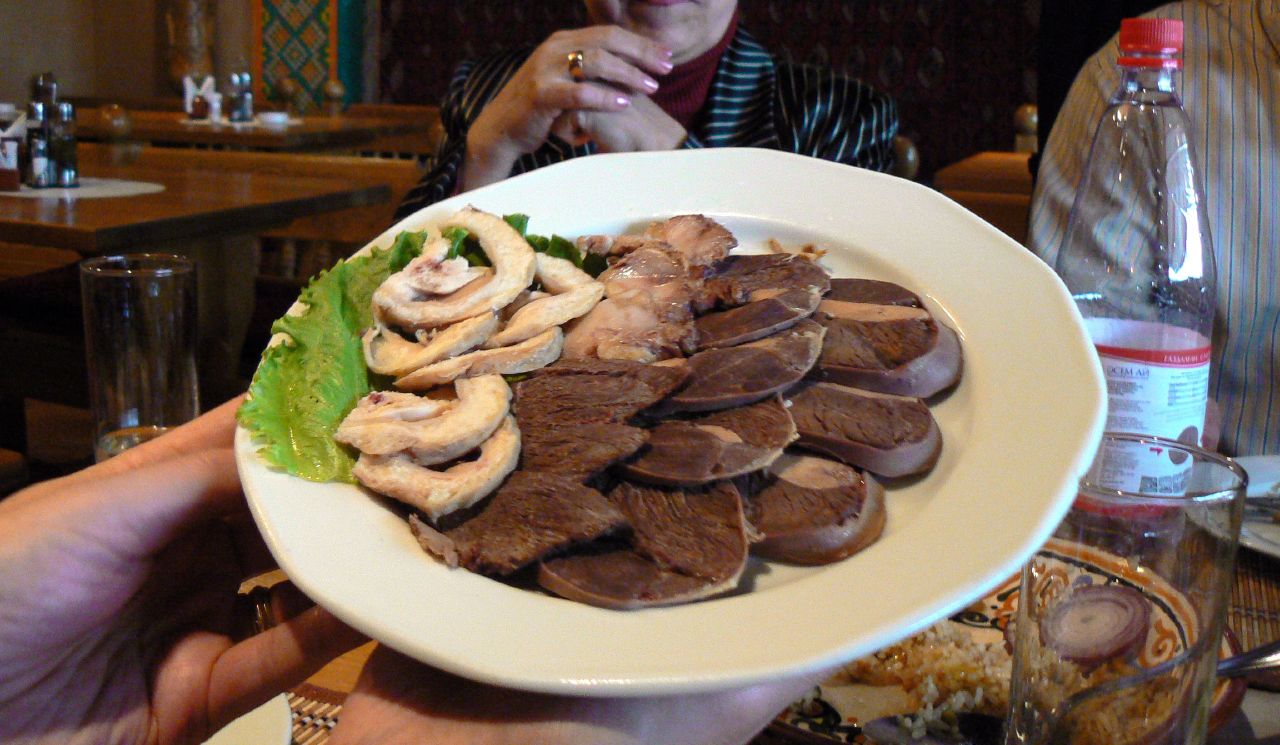
Photo: Horse delicacies include zhal (smoked lard from horse's neck) and zhaa (salted and smoked meat from horse's hip / hind leg).
Other specialty dishes include Kuiryk-bauyr which used to be served to kinsmen at wedding parties- boiled meat, sliced thinly, then sour milk and salted broth are added. Kuyrdak (also spelled kuirdak, a dish made from roasted horse, sheep, or cow offal such as heart, liver, kidneys, and other organs, diced and served with onions and peppers) and Mypalau made by putting sheep's brain in a wooden bowl, adding the marrow and some pieces of meat, add salted fat broth and garlic.
Beverages
Kazakhs like their Karakalpaks and their Uzbeks cousins love to drink lots of Chai (tea) with their meals or with sweets after the main course. Chai was first introduced into Central Asia from China along the silk road. Sometimes Kalmak sour cream made from boiled milk (Sut) , and is also served with tea.

Photo: Kumys fermented mare's milk
Traditional beverages include fermented mare (horse)'s milk (Kumys), fermented camel's milk (Chal or Shubat), cow’s milk (Ayran) are sparkling white beverages with a sour flavour and are seen as good for one’s health and are often imbibed.
Ayran (buttermilk) which is sour milk used both in winter and summer is a cold beverage of yogurt mixed with cold water and sometimes salt.
Others include Sary mai is butter made of old milk, often in a leather bag. Suzbe and Katyk are strained and thickened sour milk and Koryktyk is a herdsman’s food- thickened milk made out on the steppe. Tosap made from the scum on the sides of a metal pot and is used as medicine.
Kurt is a type of cheese eaten throughout Central Asia which is made from dried cheese and whey and rolled into balls, prepared by pressing thick sour cream, and is dried until white and salty and Irimzhik (cottage cheese) dried sour milk product similar to Kurt, but not rolled into balls) is processed in the spring, made from boiled, unskimmed milk and added sour cream.
Source: Wikipedia and other sources.
Source: Wikipedia and other sources.


